Published Monday, 13 July 2026 | By LadyBugz Marketing
For two decades, Google dominated search so thoroughly that ‘googling’ became a verb. But the numbers are shifting. According to the Meltwater Digital 2026 Global Overview Report, Google’s share of search engine referrals has dropped from 92.37% in 2019 to 89.89% in 2025. While Google remains dominant, the direction of travel matters more than the current position. For B2B marketers, this gradual decline signals a fundamental change in how business buyers find information and evaluate solutions.
Where the search traffic is going
The decline is not being driven by traditional competitors like Bing or Yahoo. It is being driven by AI platforms. ChatGPT.com now receives 6.68 billion monthly visits, making it the fifth most visited website globally, ahead of X, Reddit, and WhatsApp. ChatGPT and GPT are now among the top 20 most searched terms on Google itself, ranking 13th and 19th respectively.
The AI referral ecosystem is growing rapidly. ChatGPT drives 80.92% of all AI-referred web traffic, followed by Perplexity at 8.12% and Microsoft Copilot at 5.17%. In South Africa specifically, Google still holds 94.21% of search referrals, but the same AI trends that eroded global share are accelerating locally. With 41.2% of South African internet users already using ChatGPT monthly, the shift is well underway.
Why traditional SEO is not enough anymore
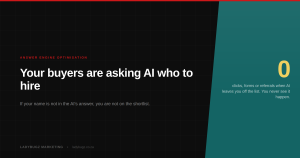
- AI platforms synthesise rather than list: When someone asks ChatGPT about B2B marketing solutions, they get a curated answer, not ten blue links. Your content needs to be authoritative enough to be cited, not just ranked.
- Zero-click answers are expanding: Between Google’s own AI Overviews and standalone AI platforms, more queries are being answered without the user visiting a website. Content must deliver value that goes beyond what a quick summary can provide.
- Search intent is fragmenting: 80.3% of internet users still use search engines monthly, but they now supplement searches with AI tools, visual search (26.2% use image recognition tools monthly), and social media research.
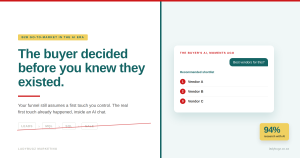
- B2B buyers research differently: Business decision-makers are increasingly using AI platforms to compare solutions, draft RFPs, and validate vendor claims before engaging with sales teams.
What B2B companies should do now
The answer is not to abandon SEO. Google still processes billions of searches daily. But B2B companies need to layer Answer Engine Optimisation on top of their existing search strategy. This means structuring content to answer specific questions clearly, using headers and formats that AI platforms can easily parse, and building topical authority that makes your brand a reliable source for AI-generated responses.
Companies should also monitor their AI visibility. Are you being cited when someone asks ChatGPT or Perplexity about solutions in your category? If not, your content strategy needs adjustment. The businesses that adapt now will capture a growing share of discovery traffic as AI platforms continue to gain ground.
The Bottom Line
Google’s search share has declined from 92.37% to 89.89% in six years, driven primarily by the rise of AI platforms. ChatGPT is now the fifth most visited website globally with 6.68 billion monthly visits. B2B marketers must adopt Answer Engine Optimisation alongside traditional SEO to ensure their content is discoverable across both search engines and AI platforms. The search landscape is fragmenting, and visibility requires a multi-channel approach.
Talk to LadyBugz about AEO strategy for your business
At LadyBugz Marketing, we help B2B businesses stay ahead through strategic LinkedIn marketing, thought leadership content, and practical execution that gets results.
Source: Meltwater Digital 2026 Global Overview Report (DataReportal)
Keep reading