Published Friday, 09 October 2026 | By Noleen Thompson, LadyBugz Marketing
LinkedIn now tells B2B marketers to win the whole buying group and prove pipeline, not clicks, and the organic read of that advice matters just as much.
Key Insights
- The goal has shifted: LinkedIn's Marketing Solutions blog (Kristen Gillespie, 7 October 2026) says its aim is to help B2B marketers turn LinkedIn campaigns into measurable pipeline and revenue through connected, full-funnel strategies.
- Five principles, one idea: LinkedIn's five B2B performance principles cover pipeline signals, reaching the whole buying group, matching content to the buying stage, building demand while capturing it, and measuring business impact.
- Preference comes first: LinkedIn cites Forrester research that 68% of B2B buyers prefer a vendor before purchase, and that 80% then buy from that vendor.
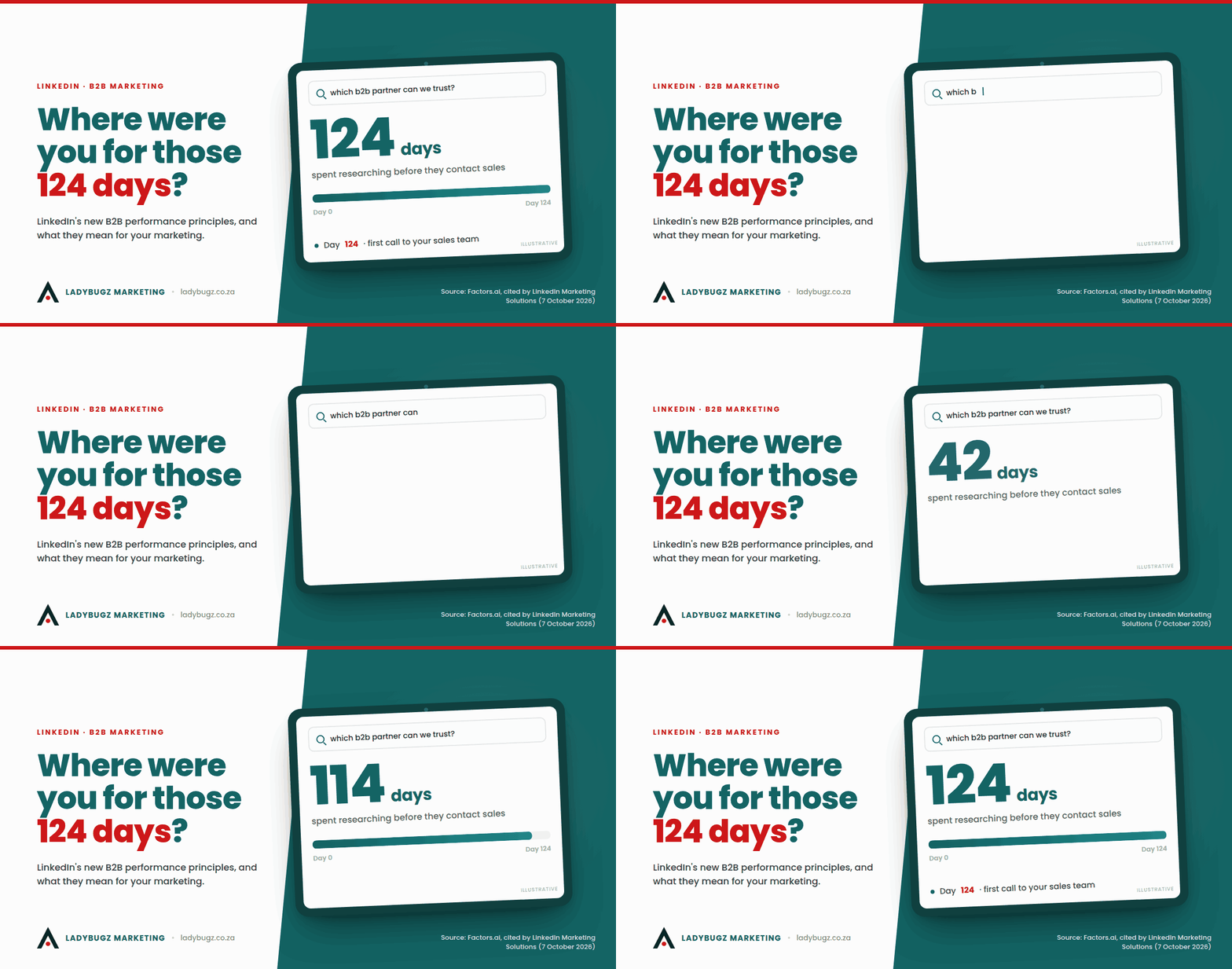
- Research happens out of sight: LinkedIn cites Factors.ai data that buyers research for 124 days before contacting sales.
- Warm audiences respond: LinkedIn cites a Trustpilot case study showing 15x higher engagement from warmed audiences and a 229% lift in form completions.
- Cost per lead can mislead: LinkedIn itself asks what a campaign delivered if cheap leads never become customers.
What did LinkedIn actually say about B2B marketing?
LinkedIn published five "B2B performance principles" on 7 October 2026, aimed at turning LinkedIn campaigns into measurable pipeline and revenue. Pipeline simply means the deals you could realistically win, from first conversation to signed contract.
The post comes from Kristen Gillespie, Director of Product Marketing at LinkedIn, on the LinkedIn Marketing Solutions blog. Social Media Today (Andrew Hutchinson, same day) covered it and framed it as a "checklist". That's the outlet's word, not LinkedIn's, so we'll call them principles.
One line from LinkedIn's post is worth keeping on your desk: "Most B2B buyers aren't in-market at any given moment."
On any given Tuesday, most of the people you'd love to work with aren't looking for you yet.
What are LinkedIn's five B2B performance principles?
In plain language, they are the following. LinkedIn's wording differs a little; this is our paraphrase.
- Use signals that point to real pipeline. Let data about who actually becomes a customer shape what you do next.
- Win the company, not the click. Reach the whole buying group (the several people inside a business who shape one purchase), not only the individual who happens to respond.
- Match your message to the buying stage. Someone just learning about a problem needs something different from someone comparing suppliers.
- Build demand while you capture it. Awareness, consideration and decision work together as one system.
- Learn, measure and prove business impact. Judge your work against pipeline and revenue, not leads alone.
LinkedIn's post says campaigns built as a connected system outperform campaigns built around a single objective. We'd say the same about a whole marketing programme.
Why does LinkedIn say buyers decide before they talk to you?
Because the research it cites says they do. These figures belong to the original researchers; LinkedIn is quoting them.
- LinkedIn cites Forrester: 68% of B2B buyers prefer a vendor before purchase, and 80% then buy from that vendor.
- LinkedIn cites Factors.ai: buyers research for 124 days before they contact sales.
- LinkedIn cites a Trustpilot case study: warmed audiences showed 15x higher engagement, and form completions lifted by 229% from full-funnel retargeting.
Put the first two together and the shape is clear. A buyer can spend about four months reading and comparing, mostly where you can't see it. By the time your phone rings, a preference has often already formed.
For a B2B firm, this changes where you should want to be seen. Not on the contact form. Earlier, in the 124 days nobody in your sales team can watch.
Ask your own best customers how they first formed a view of you. The answer is rarely a lead form. It's usually a post someone saw months earlier, a name mentioned in a meeting, or an article a colleague forwarded.
A cheap lead is not a customer
LinkedIn put it bluntly: "A low cost per lead can look like a win on a campaign dashboard. But if those leads never become customers, what did the campaign really deliver?"
It's a trap plenty of B2B firms fall into. A form fills, the number looks good, and three months later nobody can point to a signed deal. Chasing the cheapest enquiry is easy to measure and hard to turn into revenue.
This is what the fourth and fifth principles are getting at. If you only count what is easy to count, you'll keep funding the part of the journey that finishes last and ignore the part that starts it.
Do these principles apply if you don't run LinkedIn campaigns?
Yes. LinkedIn wrote its principles for campaigns, but the thinking underneath them is about how B2B buying works, and that's true whether you spend on a campaign or not.
At LadyBugz we work organic first, so here is our read of the same five ideas:
- Signals: pay attention to which posts and conversations lead to real talks with the right companies, not which ones collect the most likes.
- Buying group: a decision in a mid-sized business often involves someone watching the budget, someone who will live with the result day to day, and a senior sponsor. Your presence should make sense to each of them, not only to the person who found you.
- Stage: have something useful for the person still working out the problem, and something different for the person ready to compare you.
- Demand: consistent, useful content builds the preference that Forrester's figures describe, long before any enquiry exists.
- Proof: link your marketing to conversations and deals, not just impressions.
Social Media Today noted that LinkedIn's advice also includes measuring performance at each stage, not only the final result. That applies to organic work as much as to anything else.
Social Media Today's coverage adds that LLMs (Large Language Models, the AI behind tools like ChatGPT) have made buyer research faster and harder to see. We read that as one more reason to be clear and consistent about who you are everywhere a buyer might look.
What should a South African B2B firm do with this?
Start by asking where your buyers form opinions, then check whether you're visible and useful there. For most B2B firms, that means a credible LinkedIn presence for the business and for the people in it, content that answers real questions, and a message that stays consistent across every place a buyer might look.
A practical way to test yourself:
- Pick your last three customers and ask how they first formed a view of you.
- List who else in their business was involved, and ask what each of them could find about you.
- Look at your own reporting and ask whether it ties back to deals, or stops at leads and clicks.
If the answers surprise you, that's useful. It means the 124 days are happening without you.
We keep the detail of how we run this for clients in-house, but those questions cost nothing and tell you a great deal.
A final thought, as if we were talking over lunch. The pull is always towards the number you can see this week: leads, clicks, followers. LinkedIn is now telling B2B marketers to look past that. We agree, and we'd add that people buy from people they trust, so show up as a person worth trusting, steadily, before anyone needs you. AI can help with the groundwork, but the trust still has to be earned by real humans.
Editorial note: the five principle headings above are our plain-language paraphrase of LinkedIn's post, and the Forrester, Factors.ai and Trustpilot figures are as LinkedIn cites them. We haven't reviewed the original studies.
Want to see how visible and useful your business is where buyers research? Take the paid LinkedIn Assessment, or book a marketing audit by emailing noleen@ladybugz.co.za.
Noleen Thompson, LadyBugz Marketing
Keep reading