Published Friday, 09 October 2026 | By Noleen Thompson, LadyBugz Marketing
Avenue Z's new AIVx report names the B2B tech brands that AI tools favour, and the reason should change how smaller South African firms think about visibility.
Key Insights
- Five categories, one pattern: Avenue Z's AI Visibility Index (AIVx), dated 7 October 2026, names the leading brands in RegTech, InsurTech, MarTech, HealthTech and LogisticsTech, and in each one a small group of named brands leads.
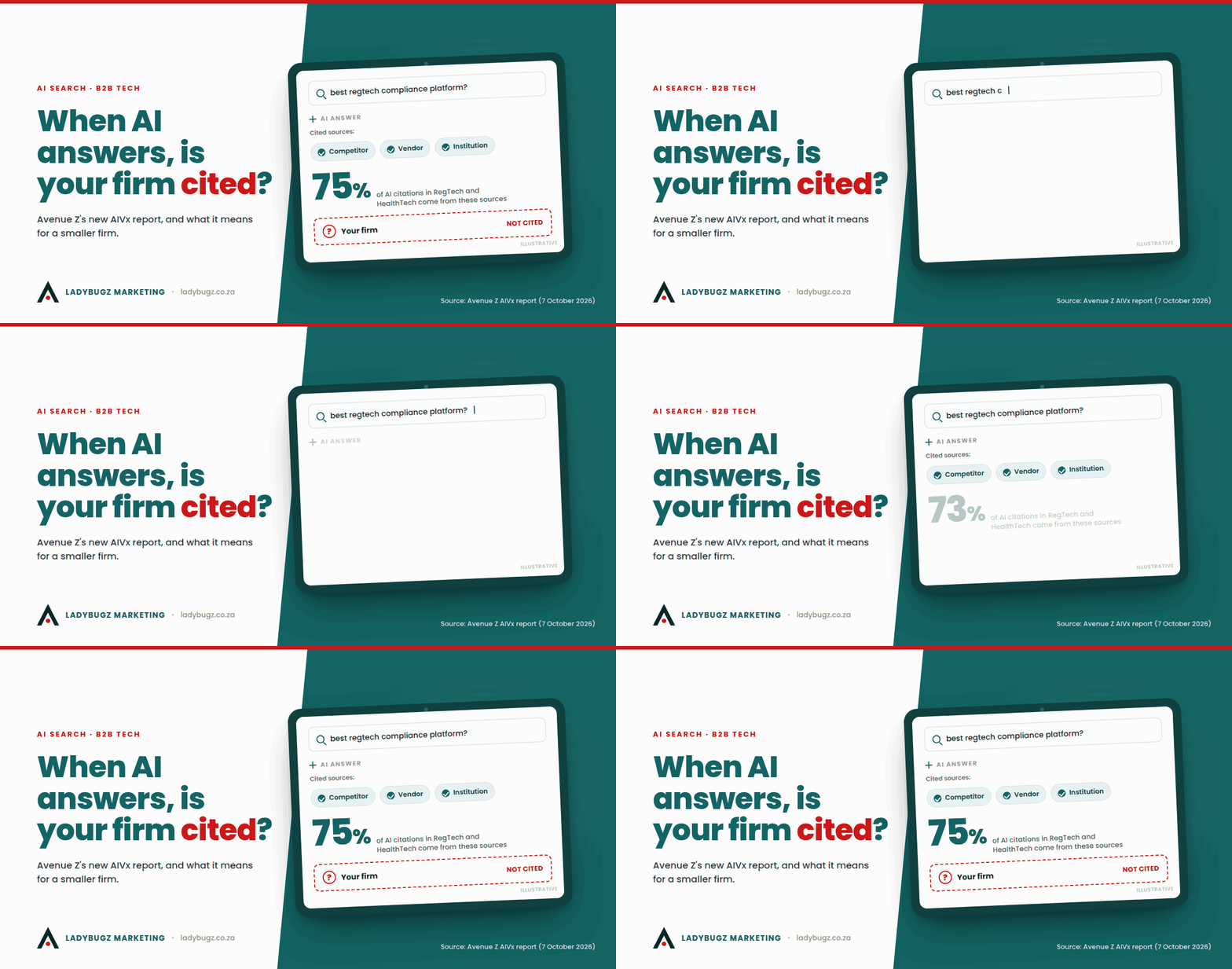
- Outside voices carry the weight: According to Avenue Z, competitor, vendor/platform and institutional sources make up 75% of AI citations in both RegTech and HealthTech.
- MarTech leans the same way: Avenue Z reports that in MarTech, competitor citations outweigh other source types, including review platforms and brand-owned content.
- PR is not the same as visibility: Avenue Z notes that many of these brands have substantial news, PR and social activity, but it isn't consistently reflected in the sources AI systems cite.
- Buyers are already asking AI: Whitney Hart, Chief Strategy Officer and Director of the AI Lab at Avenue Z, cites Gartner: nearly half of buyers already use AI in their decision process.
What did Avenue Z's AIVx report actually find?
Avenue Z, a marketing agency, found that a handful of named brands show up most in AI-generated answers across five B2B tech categories, and that AI leans on competitor, vendor and institutional sources to build those answers.
The AIVx (AI Visibility Index) looks at which brands appear when AI tools answer buyer questions, and which sources those tools cite when they compare leaders and challengers. The report covers five categories. In plain language:
- RegTech: regulatory-compliance technology, the software that helps firms follow the rules.
- InsurTech: insurance technology.
- MarTech: marketing technology.
- HealthTech: healthcare technology.
- LogisticsTech: supply-chain and logistics technology.
The leaders Avenue Z names will be familiar to anyone in these sectors. In RegTech: ComplyAdvantage, NICE Actimize and Alloy. In InsurTech: Guidewire, Socotra and Lemonade, with mShift, Shapsheet and Insurity named as fast-rising challengers. In MarTech: Salesforce, HubSpot and Adobe, which Avenue Z says dominate "AI Share of Voice", meaning how often a brand shows up in AI answers. In HealthTech: Epic, Oracle Health and athenahealth. In LogisticsTech: SAP, Oracle and Blue Yonder, with e2open, Onfleet and Samsara gaining ground.
Why do the big names keep winning AI answers?
They win because AI tools appear to build their answers from sources that talk about a brand, not just sources the brand controls. Per Avenue Z, in RegTech and HealthTech three quarters of citations come from competitors, vendors and platforms, and institutions.
Think about what that means. When someone asks an AI tool to compare compliance software, the tool doesn't only read a company's press releases. It reads comparison pages, partner listings, vendor ecosystems, industry bodies and rival sites that mention the company. Established brands likely have years of that surrounding material. They show up on other people's pages, in other people's comparisons, in the documentation of the platforms they integrate with.
Avenue Z makes a pointed observation here. Many of these brands put effort into news, PR and social, yet that activity isn't consistently represented in the sources AI systems cite. Our reading is that this visibility doesn't come from shouting loudest. It comes from being described, repeatedly and consistently, by many other sources.
I'd put it this way: AI answers are closer to a reference check than an advert.
What does this mean for a smaller or South African B2B firm?
It means the work moves off your own press page and onto everything an AI tool is likely to read about you. If those sources are thin, outdated or wrong, the answer AI gives about you will be thin, outdated or wrong.
This is where AEO comes in. AEO stands for Answer Engine Optimisation: making sure you are the answer AI tools give when a buyer asks a question. It's the same instinct as good marketing, applied to a new reader.
A sensible first check is what the outside world says about you, not what you say about yourself. Your website matters a great deal, but it's one voice among several.
The report doesn't publish a how-to for smaller firms, and it doesn't say the same dynamics hold in every market. This is our reading of it, drawn from the pattern Avenue Z describes. But the pattern is clear enough to act on. The sources worth checking are:
- Your own site. Is it plain about what you do, who you serve and where? Vague copy gives AI tools nothing to quote.
- Directories and listings. Are your details consistent, current and complete?
- Trade bodies and industry pages. Do the institutions in your sector mention you, and accurately?
- Partner and vendor pages. If you integrate with or resell another platform, is that relationship described on their side too?
- Third-party mentions. Articles, case studies and comparison pages that talk about you in your own sector's language.
You don't need to be a household name. You need the right pages, saying the right things, in places an AI tool already trusts.
Is anyone really asking AI before they buy?
Yes, and the number is not small. Whitney Hart of Avenue Z cites Gartner: nearly half of buyers already use AI in their decision process.
Hart describes the shift this way: "B2B buying has shifted to a self-directed, AI-mediated journey, where the first 'conversation' is often with an algorithm, not a salesperson." Avenue Z warns that if a brand isn't accurately represented in those answers, it is "either invisible or disadvantaged before your team ever enters the sales cycle", which Avenue Z calls a non-negotiable priority for B2B tech brands.
For a South African firm selling into local or international markets, this stings a little. You could be the best fit for a buyer and never reach their shortlist, because the AI tool they asked never had a clear picture of you. The sales call you'd have won never happens.
Where should a smaller firm start?
Start by asking the AI tools your buyers use the questions your buyers ask, then read what comes back and check which sources sit behind it. That tells you where the gaps are before you spend a cent on fixes.
A sensible first pass looks like this:
- Ask as a buyer would. Put your category, your region and your service into plain questions and note whether you appear, and how you're described.
- Trace the sources. Find the pages the answers draw on. Where they're wrong or silent, that's your list.
- Fix what you control first. Your site, your listings, your profiles.
- Earn the rest. Ask partners and clients for accurate mentions, publish things worth citing, and take part in your industry's conversations.
We keep the detailed method for client work, but the principle is simple, and it's slow, steady and organic. There's no shortcut through paid placement, and we wouldn't recommend one. AI tools read what's out there, and what's out there has to be true and useful. If you'd like help with the LinkedIn side of that picture, our LinkedIn Assessment is a good place to begin, and you can find more on the LadyBugz news page.
Editorial note
A caution on what this report can and can't tell us. Avenue Z's release names the leading brands in each category and gives the citation-mix findings above, but it doesn't publish per-brand scores or a full methodology in the text we reviewed. We don't know which AI platforms were tested, how many questions were asked, or over what period. "Dominate" is the report's word, and we haven't attached a share figure to it. Treat the findings as a useful direction, not a precise measurement. The release is also from a marketing agency, so it comes with its own commercial interest, as ours does.
A word over lunch
If I were sitting across from you, I'd say this. Don't panic about the giants, because they're not who you're competing with for most of your deals. Instead, look at yourself the way an AI tool would: from the outside, through other people's pages. Fix the small, boring things first. Make sure your name, your services and your story are told the same way everywhere. Then keep adding real evidence that you're good at what you do. AI is a new reader, but it still rewards the same thing buyers always have: a business that's clear, consistent and easy to vouch for. Human-centred marketing still wins here. AI just reads faster.
Or email us at noleen@ladybugz.co.za. If you'd like to start with LinkedIn, the paid LinkedIn Assessment is here: https://www.ladybugz.co.za/linkedin-assessment/
Noleen Thompson, LadyBugz Marketing
Keep reading